



An investor with £500 can purchase shares in Apple or Microsoft within seconds. The price appears on a screen, the order executes electronically and the investment arrives in their portfolio without anybody discussing delivery arrangements.
Now suppose that same investor wants £500 of physical gold.
A traditional bullion dealer might offer a small bar or coin, although the purchase price will include a premium above the underlying metal value. The investor must consider delivery charges, insurance and storage. Selling later may involve another spread, another transaction and potentially another journey through the dealer’s purchasing process.
Digital bullion platforms have removed many of these inconveniences, but pricing, ownership arrangements and redemption conditions still vary between providers.
This seems peculiar when considering the size of the market. More than US$160 billion of gold traded daily in London’s wholesale market in 2025. Banks and institutional investors exchange enormous quantities through sophisticated electronic systems, while individuals frequently encounter a market organised around the sale and distribution of physical products.
Somewhere between the wholesale bullion market and the individual investor, many of the advantages of modern financial trading begin to disappear.
For financial businesses, the problem becomes considerably more expensive.
Imagine a wealth management platform with 50,000 customers deciding to introduce direct physical gold ownership alongside shares and bonds. It needs access to wholesale liquidity, electronic execution, bullion sourcing, insured vault storage, ownership records, payment processing and regulatory controls. Each requirement potentially involves another supplier, contract and technology integration.
The platform could spend considerable time assembling this infrastructure before its first customer purchases a gram of gold.
Or it could offer an exchange-traded security tracking gold through its existing brokerage systems, avoiding much of that operational burden.
For decades, financial markets have favoured these kinds of alternatives. Gold-backed ETFs and ETCs provide convenient exposure, but their investors generally own securities rather than holding direct legal title to allocated bullion.
The financial industry has become extraordinarily efficient at allowing investors to trade the price of gold. Making the physical metal itself equally accessible has proved much harder.
A Problem Hiding in Plain Sight
In March 2026, the World Gold Council published Digital Gold: The Case for a Shared Infrastructure.
Its findings exposed an awkward reality beneath one of the world’s most established financial markets.
Launching a digital gold product requires coordinating custody, vaulting, liquidity, insurance, compliance, technology, auditing and redemption. These services frequently operate through disconnected providers, creating substantial fixed costs and operational difficulties.
Different platforms also maintain different ownership structures, backing arrangements and redemption conditions. Gold held through one digital provider cannot necessarily move seamlessly to another. Investors must repeatedly establish whether the metal exists, who holds it and what rights their investment actually provides.
The Council proposed an industry-wide model called Gold as a Service, connecting the physical bullion market with digital trading and ownership systems. Its proposed infrastructure brings together physical operations, digital product management and the mechanisms required to reconcile electronic records with underlying metal.
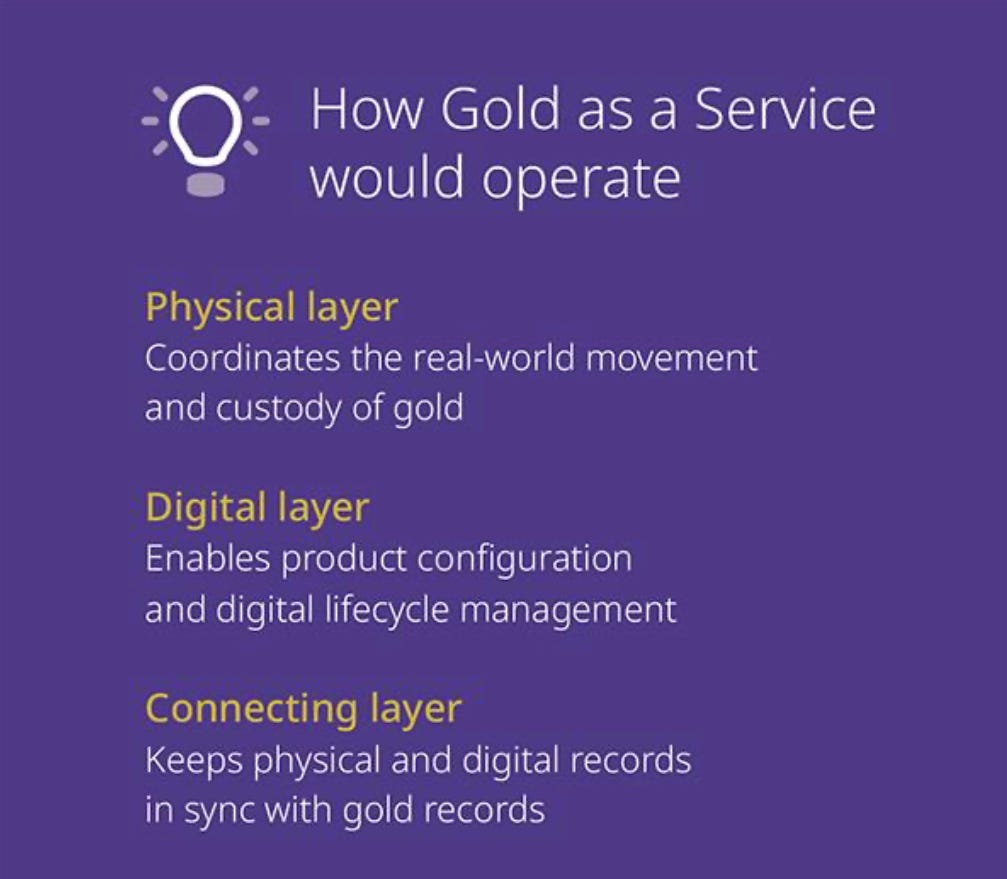
The proposal remains an industry initiative rather than an established universal standard. Nevertheless, it recognises a problem that financial technology has largely worked around rather than resolved.
Goldwise has been developing a commercial response to many of these same difficulties.
Instead of building exclusively around the retail sale of bullion, the company has developed a precious metals trading engine connecting institutional pricing, execution, physical inventory, allocated ownership, custody, payments and operational controls.
Understanding its proposition requires following what happens when an investor places an order.
The Price Depends on Who's Buying
Gold has a globally recognised market price, yet two investors purchasing identical quantities can receive noticeably different quotations.
Traditional bullion dealers must account for sourcing costs, inventory, manufacturing premiums, distribution and commercial margins. The difference between their buying and selling prices, known as the bid-ask spread, can become noticeable on smaller transactions.
Institutional markets operate through competing banks and brokers quoting prices against substantial liquidity.
Goldwise connects to more than twelve institutional metals banks and brokers, aggregating their available quotations and selecting competitive pricing across its connected providers.
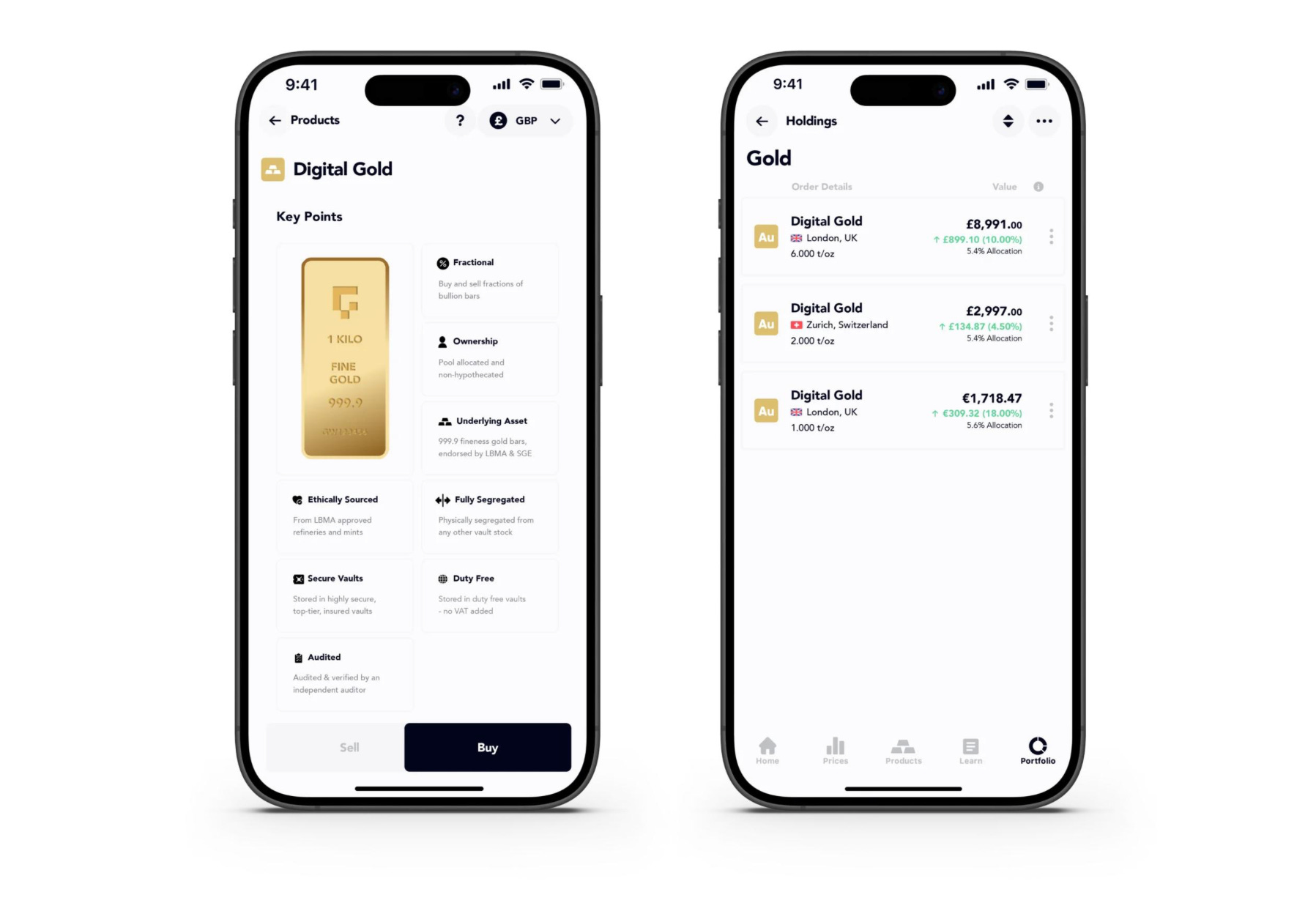
For our hypothetical £500 investor, the price can therefore originate from institutional market relationships rather than depending exclusively on a single dealer’s retail quotation. Fees and prevailing market conditions still influence the final cost, but the underlying pricing process is different.
There is another problem hiding between the quotation and the completed purchase.
A price displayed on a screen is not necessarily the price at which a transaction executes. Markets move, liquidity changes and orders must be matched, confirmed and recorded.
Traditional bullion websites often resemble retail checkouts. Goldwise instead incorporates electronic order management, supporting market, limit, stop and stop-limit orders, alongside 24/7 market-order trading and extended-hours pricing.
An investor can place instructions around price levels rather than repeatedly returning to a dealer’s website to check quotations. Execution still depends on available liquidity and trading conditions, but the experience begins to resemble managing a conventional investment portfolio.
The harder engineering starts once the order has been filled.
Somewhere, the Gold Has to Exist
A securities transaction can move through established electronic custody and settlement systems. Physical bullion introduces an additional obligation.
Somebody must source the metal, establish ownership, manage inventory and ensure the electronic records correspond with actual holdings.
Goldwise currently supports fractional allocated ownership of gold, silver, platinum and palladium. Its systems connect trading activity with physical bullion inventory, allocation and reconciliation records.
Fractional ownership allows customers to purchase smaller quantities without paying for an entire manufactured coin or bar. Allocation is intended to establish ownership interests in physical metal rather than merely providing synthetic exposure to its price.
But an electronic account balance is only as reassuring as the arrangements supporting it.
Investors accustomed to examining dealing spreads may spend considerably less time investigating who holds their bullion, how ownership is recorded or what happens if a provider encounters financial difficulties. These questions become especially relevant when the investor never physically handles the metal.
Goldwise incorporates professional vault storage, insurance and independent auditing, with international storage locations. Its reconciliation systems connect customer ownership entitlements with underlying bullion inventory.
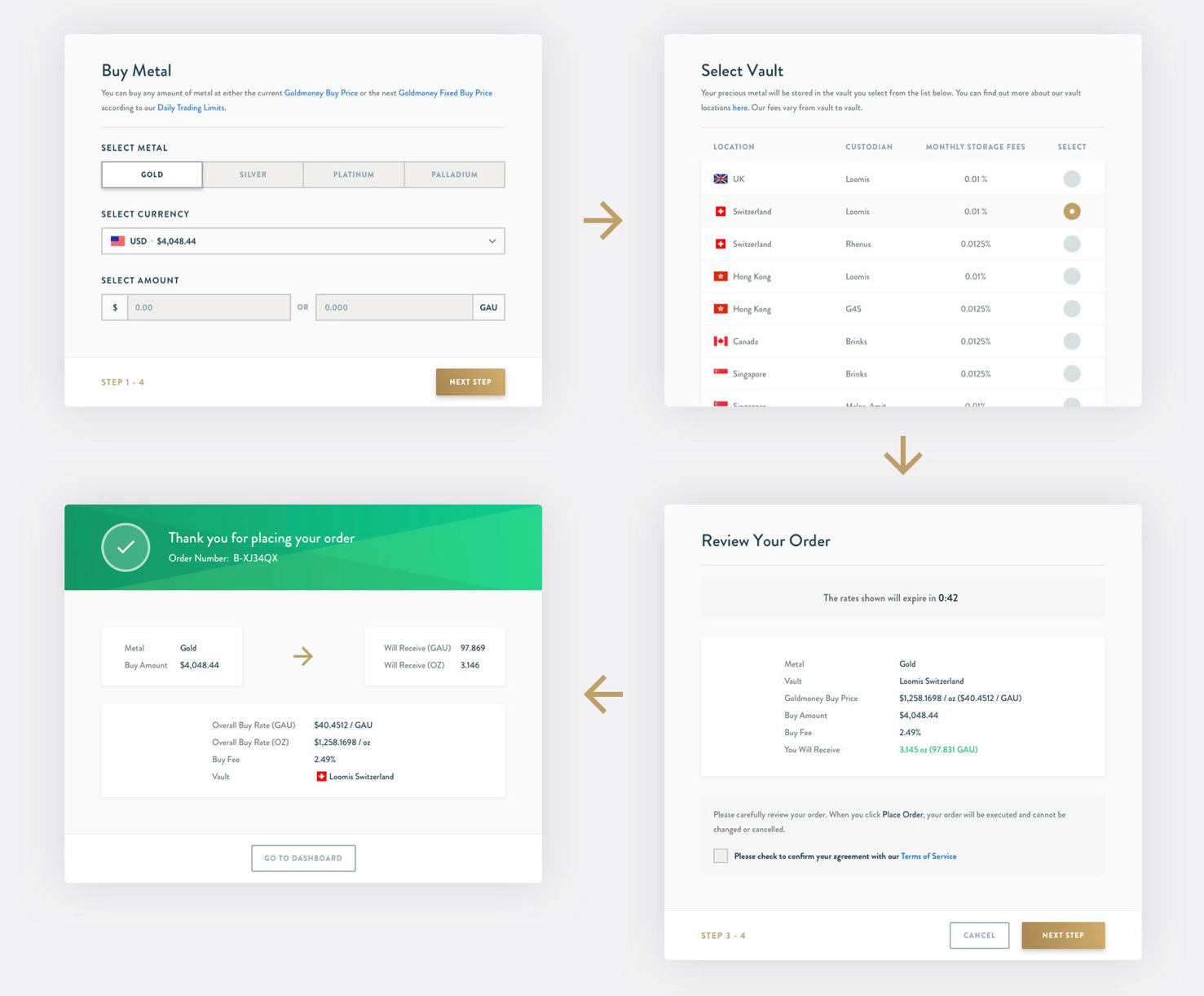
The precise legal terms governing allocation and custody remain essential, regardless of how convenient the trading interface becomes.
The company is also developing an expanded offering of whole bullion coins and bars, including physical delivery options alongside its existing vaulted fractional service.
Delivery creates further complications. Fractional holdings may need converting into finished products, with additional requirements for sourcing, fabrication, insurance and secure transport.
The World Gold Council identifies inconsistent redemption arrangements as one reason digital gold products struggle to move freely between providers.
A digital balance may be easy to display. Making the metal behind it accessible requires considerably more work.
What Happens After the Trade
Our £500 purchase also involves money moving through the system.
Traditional bullion transactions often rely on individual bank transfers or checkout payments. Goldwise incorporates trading wallets and integrated payment infrastructure, connecting customer funding, execution, settlement and transaction records.
For an occasional purchaser, the difference may appear relatively modest. For an investor making regular transactions, or a financial business processing thousands of orders, disconnected payment and trading systems introduce repeated reconciliation work.
Cash balances, executed trades and ownership records must agree. An error in one system can create problems elsewhere.
Identity verification, anti-money laundering screening, transaction monitoring and cybersecurity add further obligations. Businesses serving different customer categories or jurisdictions must accommodate requirements that can vary considerably.
Goldwise incorporates these controls into its trading infrastructure rather than leaving each participating business to assemble entirely separate processes.
None of this is particularly glamorous technology. Investors rarely ask which systems reconcile their transactions until something goes wrong.
Yet the reliability of those systems helps determine whether a precious metals platform can accommodate larger volumes without multiplying its administrative burden.
Why Build the Same Thing Twice?
Return to the wealth management platform with 50,000 customers.
It could establish separate relationships with bullion banks, trading software providers, vault operators, payment processors and compliance specialists. Each supplier would require commercial negotiations, technical integration and ongoing oversight.
Even after the platform had successfully launched, every new product or operational change could require further development across several systems.
Goldwise’s proposition is that much of this machinery can be assembled once and made available to other businesses.
Its central trading engine exposes trading and operational capabilities through integrations and application programming interfaces, or APIs. Financial platforms can therefore incorporate precious metals functionality without independently constructing every component of a bullion trading operation.
The approach follows a development already familiar elsewhere in finance. Banking infrastructure can be accessed by fintech companies that do not operate their own banks. Brokerage technology allows investment platforms to offer securities trading without independently building the underlying execution systems.
Physical precious metals have been slower to accommodate this model because the asset cannot be separated entirely from its physical requirements.
Goldwise is bringing its engine to market through several channels.
Individuals can already access fractional allocated precious metals and advanced trading functionality through the Goldwise platform.
Business services are planned, offering companies access to physical precious metals for treasury diversification and potential hedging strategies.
The infrastructure is also designed to support financial institutions, wealth platforms and other businesses seeking to incorporate precious metals trading into their own customer offerings.
These prospective services remain subject to product development and commercial integrations, rather than representing capabilities already available across every channel.
For the wider market, the attraction of shared infrastructure is straightforward. If every new provider must independently rebuild the same connections between bullion markets and financial technology, the cost of offering physical precious metals remains unnecessarily high.
The Part That Cannot Be Digitised
There is a contradiction in the financial industry’s attempts to modernise gold.
For years, innovation concentrated on making the metal easier to trade through securities, derivatives and digital representations of ownership. These instruments solved genuine problems, particularly for investors concerned primarily with price exposure and portfolio liquidity.
But physical ownership continued to depend on an assortment of dealers, custodians, vault operators and settlement arrangements operating behind the financial products.
The World Gold Council’s proposed shared infrastructure reflects a growing recognition that this fragmentation constrains what digital gold can become. Goldwise represents an attempt to connect those underlying functions.
As investment services become automated, these operational differences may become more consequential. Software can already execute securities transactions with little human intervention. Buying and holding physical metal still requires dependable connections between electronic instructions and tangible assets.
Goldwise is betting that those connections can become a routine part of financial infrastructure rather than a separate operational problem for every business entering the market.
The investor may never know which bullion bank provided the quotation, where their metal was allocated or how many separate systems were involved in completing the transaction. Nor should they necessarily need to.
Half a century of financial innovation has made it easy to trade the price of gold. Making the physical metal itself just as accessible has proved far harder.
Goldwise is attempting to close that gap.
The question is how much of the gold market will eventually depend on machinery its customers never see.
If you are thinking about how to protect your wealth in this environment, you can explore physical gold and silver through www.goldwise.com, where the focus is on ownership, security and transparency.
Goldwise are committed to producing educational content that helps investors better understand the macroeconomic forces shaping financial markets. If there are topics you would like us to explore in future editions, we welcome your feedback.
Disclosure: Mr. Matthew Oliver, Oliver Mining Network, is a shareholder in Goldwise. Any opinions, analysis and views expressed in this publication are solely those of Mr. Matthew Oliver and Oliver Mining Network and are provided independently unless expressly stated otherwise.
This publication is provided for informational and educational purposes only and does not constitute financial, investment or other professional advice. References to Goldwise are for informational purposes and should not be construed as a recommendation to purchase any product or service. Investments can fall as well as rise in value, and readers should conduct their own research and, where appropriate, seek advice from a qualified financial adviser before making any financial decisions.