


Thirty years ago, a haul truck moving rock at Nevada’s Kinsley Mountain needed a driver sitting behind the wheel. If the mine returns to production, the operator in that cab may eventually disappear.
Mining has changed since Kinsley last produced gold in the 1990s. Geological modelling software has advanced, mining equipment can be operated remotely, and the mine can now be monitored in real time from hundreds of miles away. CopAur Minerals is actively evaluating autonomous haulage for Kinsley, based on successful field trials at major mines in Nevada and Arizona, as it considers what a modern restart might look like.
Technology has done far less to shorten one part of the process.
Before a truck moves, before ore reaches a crusher and before gold is placed onto a heap-leach pad, somebody must secure permission to disturb the ground.
For years, the problem at Kinsley was understanding what was in the ground. The updated resource estimate and subsequent PEA have gone a long way towards answering that question. The problem now is different: turning a geological and economic proposition into something regulators will allow to be built.
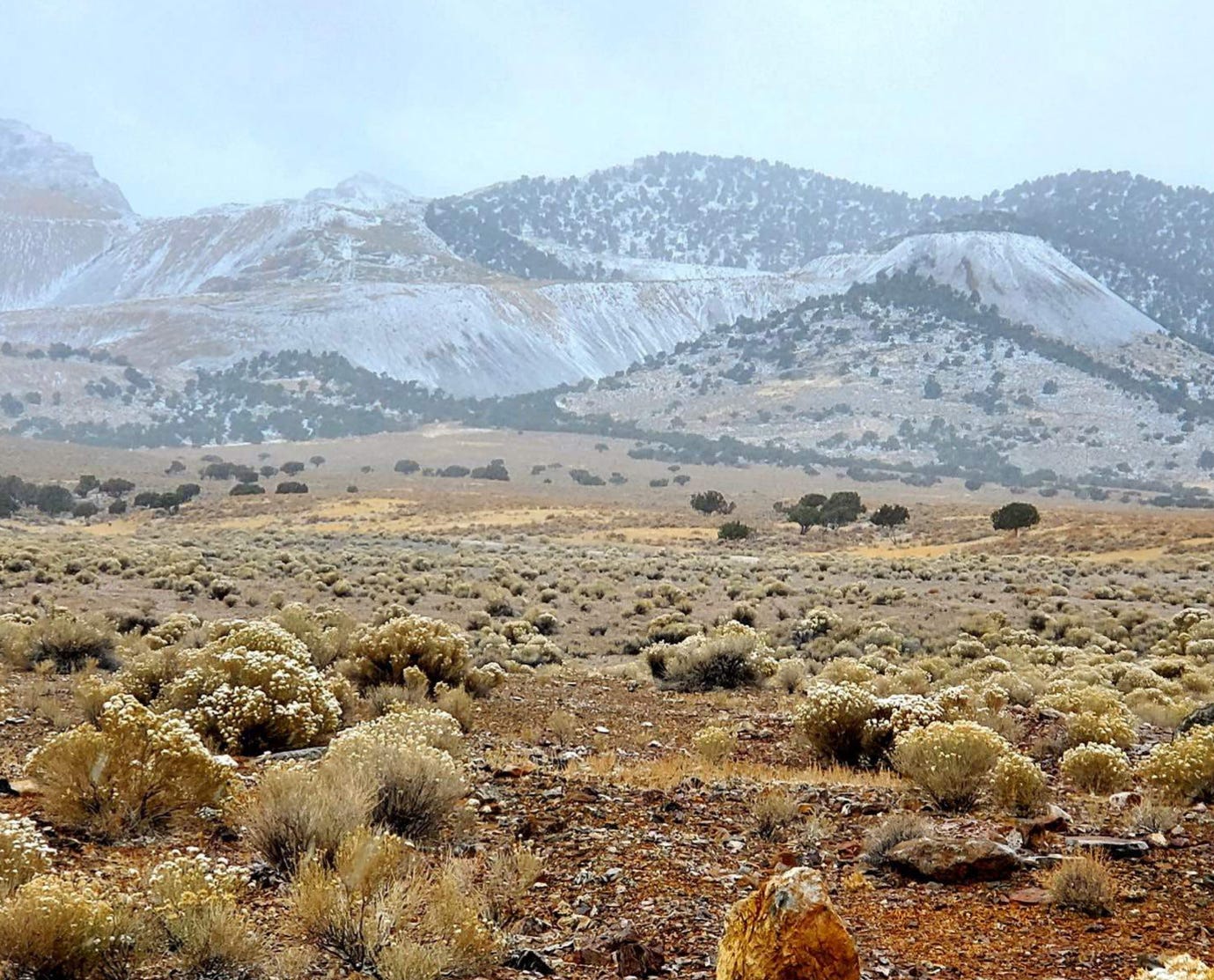
The Constraint Above Ground
Junior mining presentations tend to make permitting look deceptively simple. A project timeline moves from resource to economic study to permitting to construction, each occupying a neat box.
The boxes hide most of the work.
Kinsley sits on federally managed land, bringing the Bureau of Land Management (BLM) into the process as lead federal agency alongside Nevada authorities and other stakeholders. Following completion of its preliminary economic assessment in July, CopAur submitted its Preliminary Plan of Operations to the BLM and Nevada Division of Environmental Protection in August.
CopAur no longer needs to prove that Kinsley contains gold. The resource has been defined, the geological model updated and the PEA has put preliminary economics around an initial operation.
When the Map Starts Moving
Investors can easily picture permitting as something that begins once the engineers have finished designing the mine.
Before development occurs on public land, CopAur must establish the existing conditions around Kinsley, including wildlife, water, vegetation, cultural resources and socioeconomic factors. It must then assess how the proposed operation could affect them and determine where those effects can be avoided, reduced or mitigated.
That work feeds back into the mine itself.
A road can be moved. A waste dump can be relocated or made smaller. Seasonal restrictions can alter when work takes place. Habitat can be protected by changing the physical footprint, with mine design and environmental work developing alongside one another.
For investors used to measuring progress through drill results, this stage can look uneventful. There may be no spectacular intercept to announce and no resource estimate suddenly becoming 50% larger. Progress comes through baseline surveys, technical submissions and conversations with agencies.
At this stage, a road moved on an engineering drawing can matter more than another promising drill hole.
Old Ground, New Rules
Kinsley is not a greenfield project. It has been an operating gold mine before.
Approximately 138,000 ounces of gold were produced from open pits between 1995 and 1999. CopAur has designed the proposed restart around a brownfield philosophy, seeking to use previously disturbed areas and limit additional surface disturbance where practical.
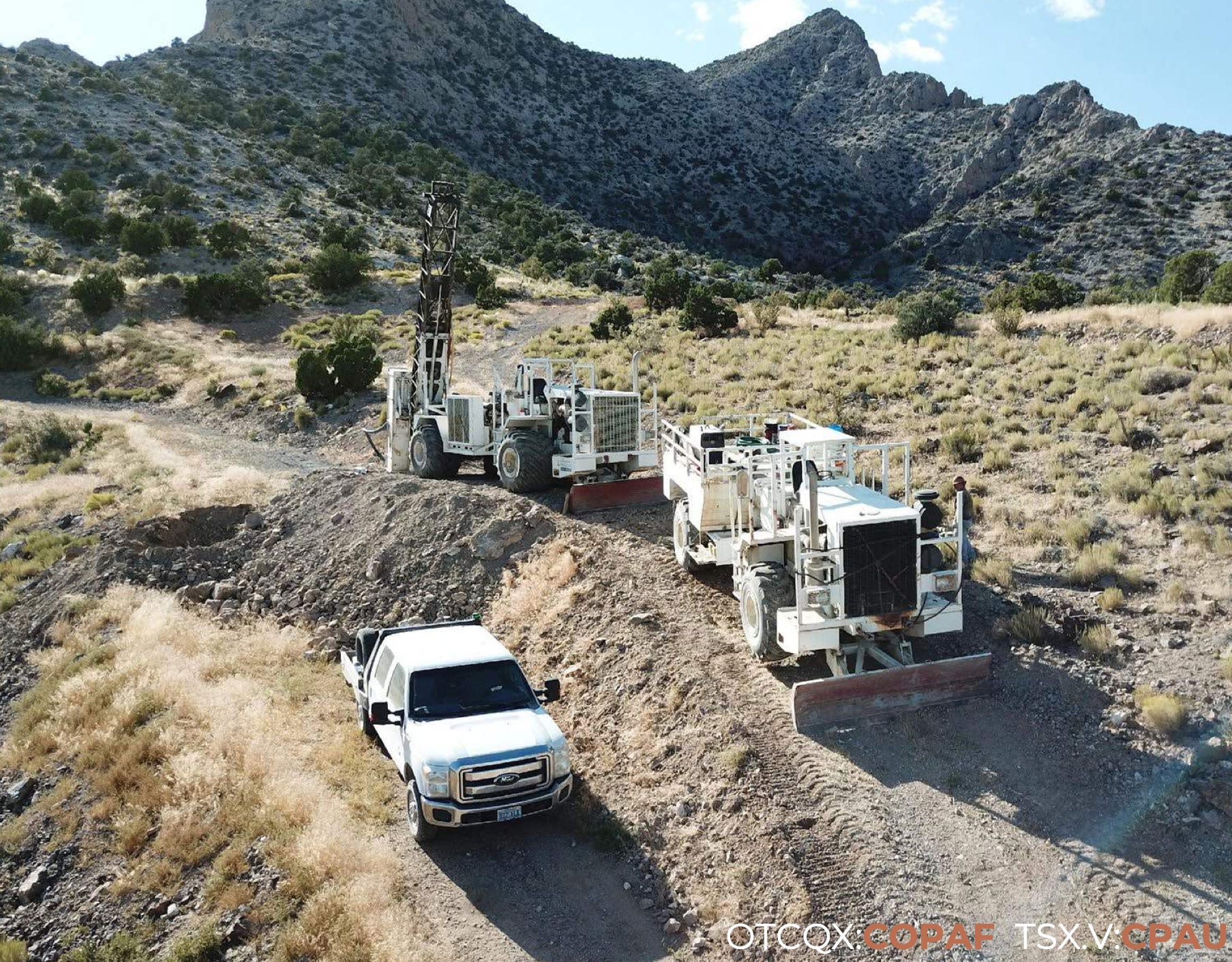
Previous mining does not grant the company a regulatory shortcut. What it does is change the physical problem confronting the engineers.
A greenfield project begins by deciding where infrastructure should be placed across ground that has not previously hosted a mine. At Kinsley, part of the exercise is determining how much of the proposed operation can be accommodated within, or designed around, areas disturbed by earlier mining.
Every additional acre disturbed gives regulators something else to assess.
Brownfield does not mean easy. It means the engineers begin with a different map.
Three Eagles and a Mine Plan
“Permitting underway” sounds administrative. At Kinsley, much of the work is happening out on the ground.
Aerial surveys identified three active golden eagle nesting sites, two requiring direct assessment because they fall within the potential zone of impact. One-mile and two-mile buffers apply around relevant nesting areas, while potential impacts are quantified through a conservation system under which disturbance can require corresponding conservation credits.
Greater sage-grouse introduce another layer. Nevada manages development impacts on their habitat through its own conservation-credit system. CopAur has surveyed ground conditions and expects further field verification during the birds’ mating season. Water, soils, vegetation, reclamation, archaeological resources and socioeconomic effects also form part of the baseline work.
CopAur says it has completed the engineering work and a significant portion of the surveys required at this stage, completed its baseline work and submitted its pre-plan of operations. The BLM will coordinate the environmental review, other agencies and eventual public participation. CopAur expects the initial BLM kick-off meeting in October.
That engagement should begin replacing assumptions with requirements.
The BLM may request additional work, and the surveys themselves can force changes to the design or timetable. The process then moves through public review towards a record of decision.
Management says it has not identified material permitting issues that would change the current development concept. That is management’s assessment, not regulatory approval.
Until the agencies have worked through the plan, there remains a difference between a mine that appears permit-able and a mine that has been permitted.
Where Junior Miners Become Developers
This stage helps explain why so many junior mining companies discover deposits they never build themselves.
Exploration can be run by relatively small teams directing much of their capital towards geology and drilling. Development changes the organisation.
Environmental consultants and engineers become a larger part of it. Legal work, bonding, technical studies and agency interaction consume money before the proposed mine has produced a dollar of operating cash flow.
Time starts costing money.
A junior has limited people and capital. The agencies reviewing its project have their own staffing constraints, statutory responsibilities and procedural timelines. Nobody needs to be deliberately obstructing a mine for another month of studies or review to cost the developer money.
Permitting tests something geology cannot: corporate endurance.
That puts a different premium on management experience. Neale has more than 35 years across exploration, engineering, construction and operations. COO Chris Babcock brings more than 40 years in open-pit heap- and vat-leach gold projects, including development of El Castillo and involvement in the start-up of Alamos Gold’s Mulatos Mine.
Those résumés mattered less when the question was what Kinsley contained. They matter more when the job is turning a resource into an operating business.
Keeping the First Mine Simple
The mine CopAur is trying to permit is modest by modern standards.
The PEA envisages average annual production of roughly 30,500 ounces, with approximately 122,000 ounces recovered over the initial operation. At US $4,000 gold, it produces a post-tax NPV of approximately US$104 million.
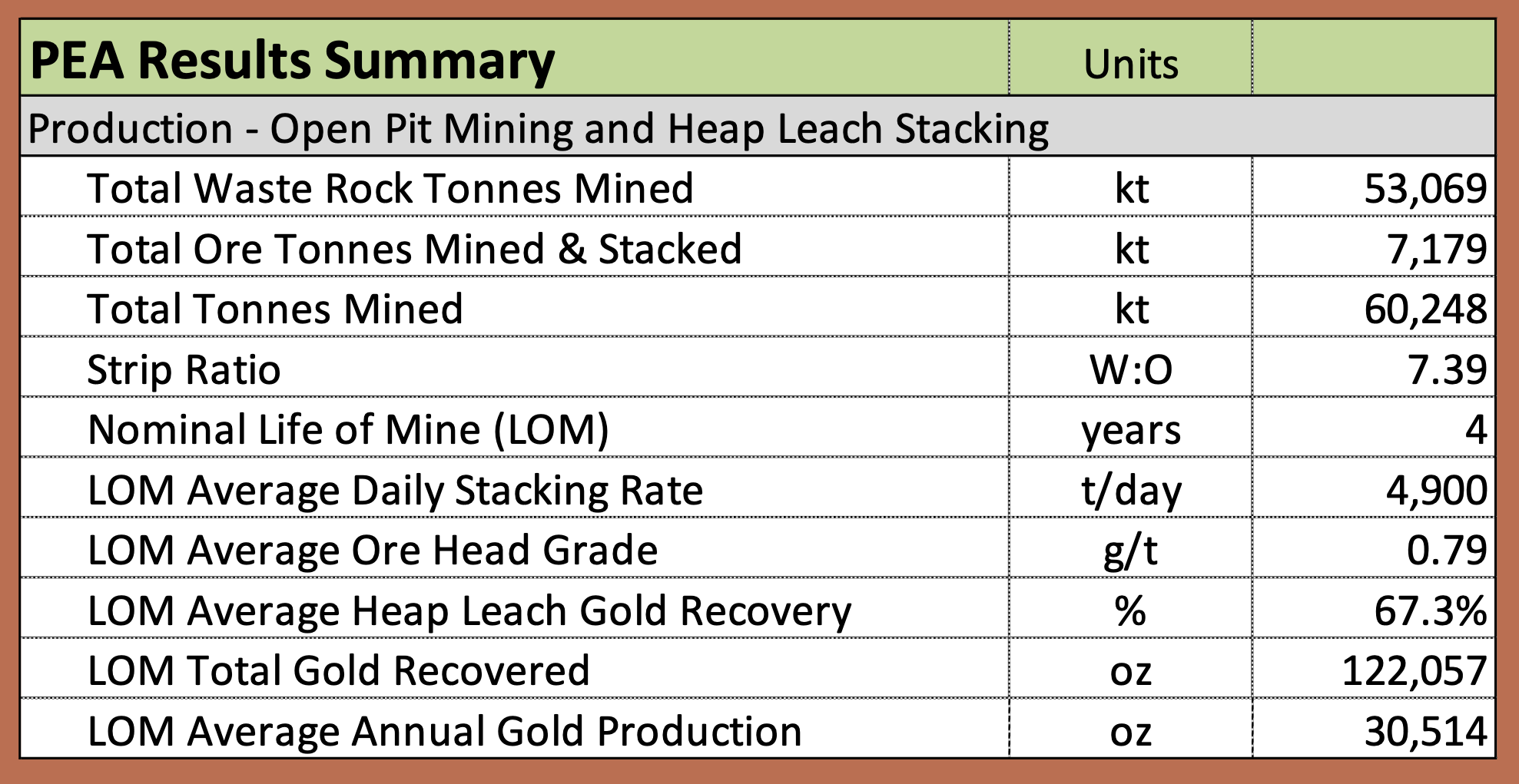
CopAur has kept the processing plan narrow as well. The initial plan concentrates on oxide material suitable for conventional heap leaching, leaving the sulphides for a later economic assessment. CopAur is not asking the first operation to solve every geological opportunity at Kinsley.
The immediate objective is narrower. Get the first mine through engineering, permitting, financing and construction.
The Milestones That Matter Now
For years, the natural way to measure progress at Kinsley was through the drill bit.
More metres drilled, more ounces defined, more confidence in the geological model.
The PEA is filed and the Preliminary Plan of Operations submitted. Attention now turns to what the BLM requires, whether further baseline studies or design changes emerge, how the environmental review progresses and whether a clear route towards a record of decision begins to take shape. Beyond that come financing, detailed engineering, construction and a potential restart.
Another successful drill hole would still matter. It just may no longer be the development that determines when Kinsley becomes a mine.
If Kinsley returns to production, the mine may look very different from the operation that closed in 1999. The equipment could change, the resource could grow and the economics will move with the gold price.
But before CopAur decides who, or what, drives the trucks, it must earn the right to put them back on the mountain.
Three decades after Kinsley last produced gold, that remains one piece of the mining process no machine can do for it.
Disclosure: This article has been commissioned by CopAur Minerals Inc. (TSXV: CPAU). The views expressed are that of Matt Oliver, Oliver Mining Network and reflect his own analysis. This article is provided for informational purposes only and does not constitute financial or investment advice. Investments are inherently speculative and involve risk, including the loss of capital.